


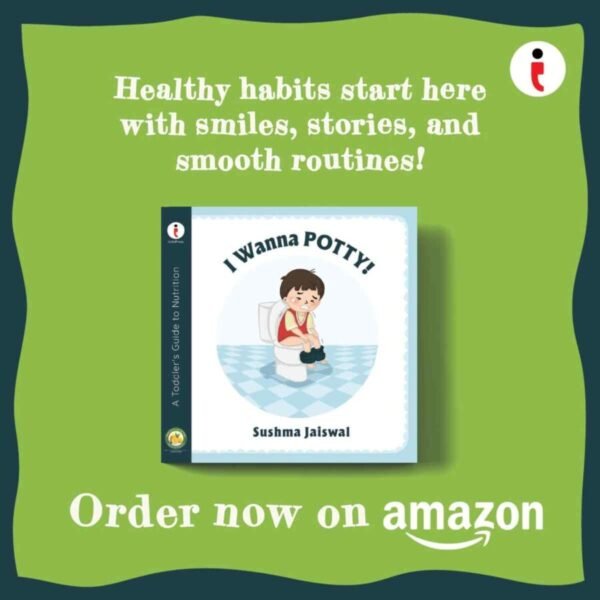
I Wanna Potty! is a fun, interactive, and educational children’s book designed to address an important yet often overlooked issue—constipation and unhealthy eating habits in young children.
Written by nutritionist Author Sushma Jaiswal, the book uses colourful illustrations, simple storytelling, and relatable characters to help children aged 2–5 understand the importance of healthy eating and proper digestion in an engaging and non-intimidating way.
The story is inspired by real-life observations of increasing digestive issues in children due to excessive consumption of junk food such as noodles, burgers, chocolates, biscuits, and ice creams. Through a playful narrative, the book introduces children to healthier food choices that support a happy tummy and painless potty routines.
Designed with minimal text and strong visual storytelling, the book allows even non-readers to understand the message through images, making it highly accessible for early learners. It also serves as a helpful tool for parents and educators to initiate conversations around nutrition, hygiene, and healthy lifestyle habits.
1. What inspired you to write for a younger audience, and how do you approach crafting a story that resonates with children?
There were increasing cases of children suffering from constipation and acute digestive issues, often crying for hours due to pain during potty time. On observing their diet—rich in junk foods like noodles, burgers, chocolates, and ice creams—it became clear that the root cause was unhealthy eating habits.
Since it is not possible to reach every child personally, I decided to write storybooks that could educate and influence them in a simple and engaging way. My approach is to use storytelling as a medium to build awareness in a child-friendly manner.
2. Children’s books often carry important messages. What themes or values does your book aim to convey?
The primary message of the book is the importance of healthy eating habits as the foundation of overall well-being.
It emphasizes consuming wholesome, fiber-rich foods to prevent constipation and promote healthy digestion from an early age.
3. How did the collaboration with the illustrator enhance the storytelling process?
The collaboration worked well overall, and the illustrations have come out effectively in conveying the message. However, in some cases, the expressions were not exactly as envisioned, which required compromises.
Additionally, the pace of delivery was slower than expected, but the visual outcome still supports the storytelling experience.
4. How do you balance entertainment and education in your children’s books?
Children prefer books that are engaging and quick to finish. Therefore, the book was designed with colourful illustrations and minimal text.
This ensures that even children who cannot read yet can still understand the story through visuals, making learning both fun and effective.
5. How do you create characters that children can relate to?
The characters are designed with simple, memorable names that children can easily remember and connect with.
My background in library science and experience working in school libraries helped me understand children’s preferences better. Additionally, maintaining a home library for children while living in Germany gave me practical insights into how children engage with stories.
6. In the digital age, what role do children’s books play in fostering reading habits?
Despite the rise of digital entertainment, books continue to hold strong value in a child’s development. Parents play a crucial role as role models in encouraging reading habits.
Instead of excessive use of social media, parents should engage children in reading and discussing book characters, helping them build imagination and a lasting love for stories.
7. How do you tailor your writing style for young readers?
The writing style is based on an understanding of child psychology. The language is simple, direct, and aligned with how children naturally communicate, while still delivering meaningful educational messages in an engaging way.
8. How do you envision your books being used in educational or family settings?
These books can serve as valuable tools for families and educators to teach children about nutrition and healthy habits.
Since many modern health issues in children are linked to dietary patterns, early awareness can help prevent such conditions. This can also reduce school absenteeism caused by preventable health concerns and promote healthier lifestyles from a young age.
Help your child build healthy eating habits in a fun and engaging way.
Get your copy of I Wanna Potty! by Sushma Jaiswal on Amazon today.
