


In a world moving faster than ever, What If… Why Not? invites readers to pause, reflect, and reconnect with what truly matters.
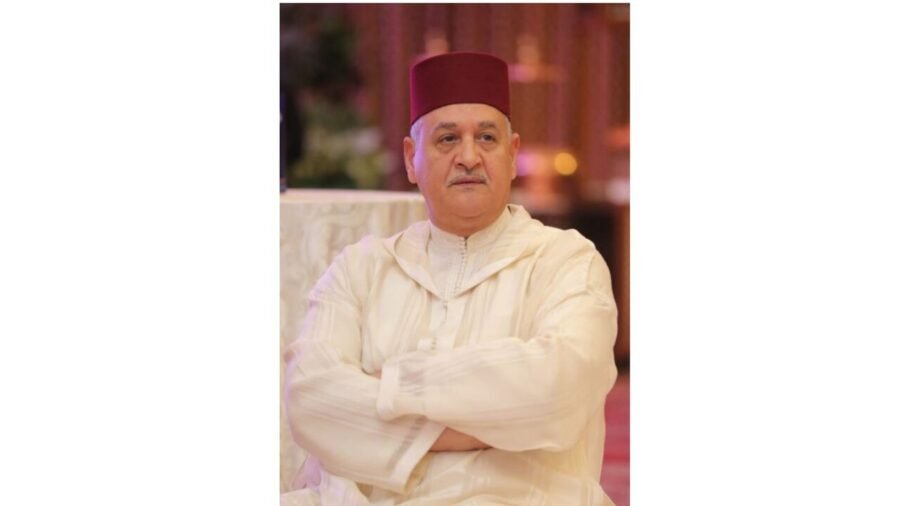
Written by Ambassador Mohamed Maliki, Ambassador of His Majesty the King of Morocco to India, this book is a thoughtful collection of real-life stories drawn from more than 35 years of diplomatic service across continents and cultures. From the vibrant streets of Pakistan to the rain-soaked landscapes of Cameroon, from high-level negotiations to quiet family moments, these stories reveal the deeply human side of diplomacy.
More than a memoir, What If… Why Not? is a philosophy of life—rich with humour, humility, and wisdom. It explores the difference between what is important and what is essential, highlighting values such as empathy, family, faith, resilience, and human connection. Told in a conversational style, the book feels like a long discussion over mint tea—honest, reflective, and quietly profound.
1. Can you provide an overview of your book and how it addresses key challenges in the world today?
What If… Why Not? is simply a collection of stories from a life that has been generous enough to place me in unusual situations, interesting countries, and occasionally in serious trouble—from which I somehow survived to tell the tale. This book grew out of curiosity more than ambition: curiosity about people, cultures, and those small moments that quietly teach us the biggest lessons.
While it draws from my upbringing in Morocco and my years as a diplomat, it is not a formal memoir. It is a philosophy of life. I prefer to think of it as a long conversation—perhaps over mint tea—where experiences are shared, laughter appears when least expected, and reflection follows naturally.
Behind the humour and anecdotes lies a simple concern: we live in a world that often confuses what is important with what is essential. Titles, status, speed, and appearances tend to overshadow values such as empathy, humility, faith, and human connection. Through real encounters—from childhood mischief to diplomatic challenges and unexpected friendships—I try to show that understanding others, listening more than speaking, and keeping one’s feet firmly on the ground can still make a difference.
In a time of division and impatience, this book does not pretend to offer grand solutions. Instead, it offers perspective—sometimes serious, sometimes playful, often self-critical—and a reminder that life, like diplomacy, works better when we allow room for humour, kindness, and the courage to ask ourselves, now and then: What if… why not?
2. What inspired you to write this book, and what specific expertise or experiences do you bring to the subject matter?
The initial idea of writing the book was not mine. In fact, for a long time friends and people around me were pushing me to write down my ideas, as there was always some common sense mixed with a bit of humour in my discussions.
As for the specific subject, the book is much bigger than one single subject. It is a sharing of experiences and ideas, but it is also much more about dealing with life lessons. With our world moving digitally very quickly, I felt it was very important to remind people and readers of values—however basic they may look nowadays—especially the centrality of family relationships and the role of women in cementing and transmitting these values.
3. Could you share some of the most valuable insights or takeaways that readers can expect from your book?
Sharing bits of the life of a diplomat with a 35-year career is meant to exchange ideas and mainly pitfalls for others to learn from. It offers life’s perspectives through the lens of an official at the service of his country, including the other side of a diplomat’s life that people do not usually see beyond the glittering image.
It is not just about the diplomat. It is about a father, a son, and a husband who belongs to an old nation with a strong cultural heritage. It is also about the value of things instead of the price of things, and about differentiating between the important and the essential things in our lives. It is meant for different kinds of readers.
4. Can you highlight any case studies or real-world examples from your book that illustrate the principles you discuss?
The book is made in such a way that it shares life lessons graciously through true stories. These are not illustrations as such; they are the embodiment of events that truly happened, through which readers may learn lessons, laugh at a joke, or feel sadness about certain events.
It is also about simple stories—stories that happen to each of us in different ways. The stories of today are tomorrow’s history, so any book is, to a certain extent, a living heritage of the period in which it is produced. Different stories, whether important or trivial, remain more than simple illustrations or cases. In a very specific manner, the book remains an illustration of my own philosophy of life.
5. Are there any particular challenges or obstacles you encountered while writing this book, and how did you overcome them?
In every endeavour, there should be obstacles; otherwise, what is the meaning behind it? The value of doing things comes from the problems you face and how you overcome them.
Since writing the book was not initially my idea but something I was pushed to do, time was the most difficult part to manage, besides my very bad handwriting. I discovered later that this was because my stream of thoughts and ideas seems to be quicker than my hands.
For the first problem, I managed it mostly by working late at night and during free time at the office. The second problem was overcome by recording my stream of thoughts and ideas and writing them down with the help of someone else, then reviewing and changing them almost indefinitely.
To be honest, my biggest challenge was myself. I am a person who looks for perfection, and the more I reviewed the book, the more changes came up—until I finally decided to stop. In fact, two to three chapters were removed because of this challenge.
6. What do you hope readers will gain from reading your book, and how do you envision it making a positive impact on their lives?
The book can be seen from different angles and is meant for different kinds of people. Written mostly in a conversational style, the reader feels involved right from the beginning.
Those who enjoy life lessons, history, humour, pitfalls, negotiations, family values, resilience, family connections, and the difference between important and essential things will find that the book tackles a variety of subjects in a very natural manner, without pre-set objectives.
It is not for me to predict what any reader will find interesting, but it is the sincere hope of any author to leave a positive impact—especially through life lessons, learning from pitfalls, and reminding readers of the importance of values we are losing. The impact of the book will ultimately be reflected in the recommendations readers make to others.
7. In a rapidly changing environment, how does your book stay relevant and adaptable for readers over time?
The question is part of the answer. In a rapidly changing world, we need good reference points, but even more importantly, we need to stick to the values our parents and families taught us, or those we learned at different stages of life and in different places.
Reading has become increasingly rare, and people mix the virtual world more and more with reality. It has therefore become more important than ever to share experiences and raise awareness about the importance of reading and the joy and satisfaction it brings.
For this reason, every physical book is a chronicle of its time and will always remain a witness of history, making it naturally relevant.
Discover the human side of diplomacy.
Reflect on values that truly matter.
Available now on Amazon — What If… Why Not? by Ambassador Mohamed Maliki.
